
Clark County Court Docket Searches
Start any Clark County court docket search by naming the right court. Common Pleas holds felony criminal cases, general civil filings, and adult domestic-relations matters. It also keeps county appellate records. The countywide Municipal Court keeps traffic, misdemeanors, parking, trusteeship, TPO, and small claims. Probate runs a separate record route of its own. Juvenile Court records sit on a distinct path, and access there is often restricted. A blank result in one Clark County docket system never proves the case does not exist.
Gather the court name, case number, caption names, and a rough year before you search. A name match alone means little. The court and the date of the newest docket entry matter just as much. Remember what a public docket is. It works as a locator and a chronological case history. It is not a certified copy of any filing. It also never replaces clerk-confirmed court-date information.
- Read the court named on the citation, summons, notice, or earlier case record.
- Choose Common Pleas, Municipal, Probate, Juvenile, or the relevant Mayor’s Court.
- Use one focused identifier, such as a case number, citation number, or available name field.
- Read the newest Clark County docket entry and setting before relying on an older date.
- Contact the court clerk for an older case, a delayed filing, a restriction question, or certification.
Clark County CourtView Docket Gate
The Common Pleas public route is CourtView / Equivant eServices. Its public-record path opens with a CAPTCHA acknowledgement. That approved route is the one to use rather than any attempt to bypass it. What the searcher meets past the entry screen depends on the court. The Legal Division states that online information reflects docket entries required by Ohio law. It is updated nightly, and it normally runs current through the prior business day.
The official CourtView entry screen appears in this Clark County court docket image.
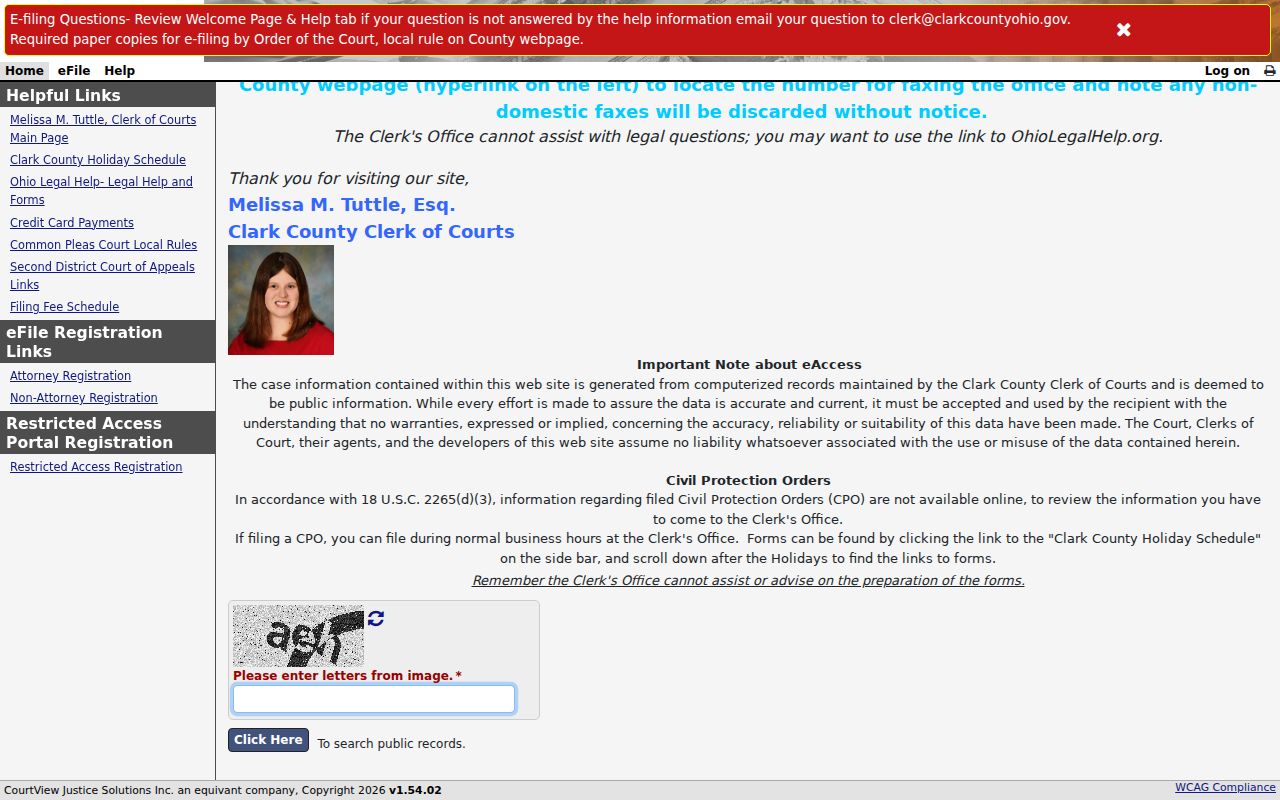
Some records call for the Clerk rather than the screen. A recent filing, a correction, a civil protection order, or a pre-1990 record can require Clerk contact instead of an online result, and civil protection order information is not available through the CourtView public search at all. E-filing is available through CourtView but is not mandatory. Note that it is not the same service as the public docket search.
Court Dockets: What They Show
Clark County Common Pleas rules call the chronological clerk record an appearance docket. The local framework captures the assigned judge and the caption or case nature. It also includes the annual civil or criminal serial number and the case type. Pretrial or trial settings, continuances, the decision or verdict date, and the final-entry date appear too. Ohio law also supports entries for parties and counsel. Process issued, papers filed, returns, and filing dates fit under that same support. Screen layouts differ from court to court. Whatever the layout, read the record from its header down through the dated activity.
| Case number | The court-assigned identifier for the Clark County action. |
|---|---|
| Caption and parties | The case title and parties or counsel in the clerk record. |
| Filed papers | Dated process, pleadings, motions, orders, and returns. |
| Settings | Pretrial, hearing, trial, arraignment, or continuance information. |
| Final entry | A recorded court decision or disposition. |
A case file reaches further than a docket, since it may hold the underlying pleadings, orders, and exhibits themselves. Treat search results as court information rather than a complete document inventory.
Clark County Docket Entry Terms
Plain terms help separate the live issue in a Clark County court docket from the case history behind it. A continuance is simply a setting moved to another date. A final entry is the court record of a decision or disposition. One caution applies to Municipal users. "Docket Results" also appears as a Municipal calendar-query mode. It is not the full case file and not a certification.
- Appearance docket
- The clerk’s chronological record of activity, filings, process, and dates.
- Arraignment
- A criminal appearance at which the case and plea process begins.
- Preliminary hearing
- A Municipal Court stage in a felony matter before Common Pleas proceedings.
- Continuance
- A scheduled court event moved to a later date.
- Certified copy
- An official clerk-provided copy when that form is required.
Clark County publishes no verified universal portal code legend. Read terms and status labels in the context of the court and the case, not as guessed screen-value definitions.
Clark County Courts and Their Dockets
Clark County keeps court-by-court records rather than one statewide public party-name trial-court docket database. Ohio eStats reports caseload data, not individual case dockets. Pick the route that owns the matter, and use its clerk whenever the portal fails to answer the record question.
| Court or keeper | Docket covers | Search route |
|---|---|---|
| Common Pleas / Clerk | Felony criminal, general civil, domestic relations, appellate | CourtView, then Clerk |
| Municipal Court | Traffic, misdemeanors, parking, TPO, trusteeship, lower civil | Case Search and Daily Schedule Search |
| Probate Court | Estate, guardianship, adoption, marriage, trusts, name changes | Probate Record Search and court counter |
| Juvenile and Mayor’s Courts | Youth matters or participating-city traffic and ordinance cases | Separate court or city route |
A felony case can start small. It may first appear in Municipal Court as a preliminary hearing. The case then moves up to Common Pleas. Probate, Juvenile, and the city Mayor's Courts each run their own dockets too. Venue changes happen. Whenever it does, write down the court, the case number, and the date of the last docket entry.
The Clark County Clerk of Courts posts the official page describing its Common Pleas divisions.
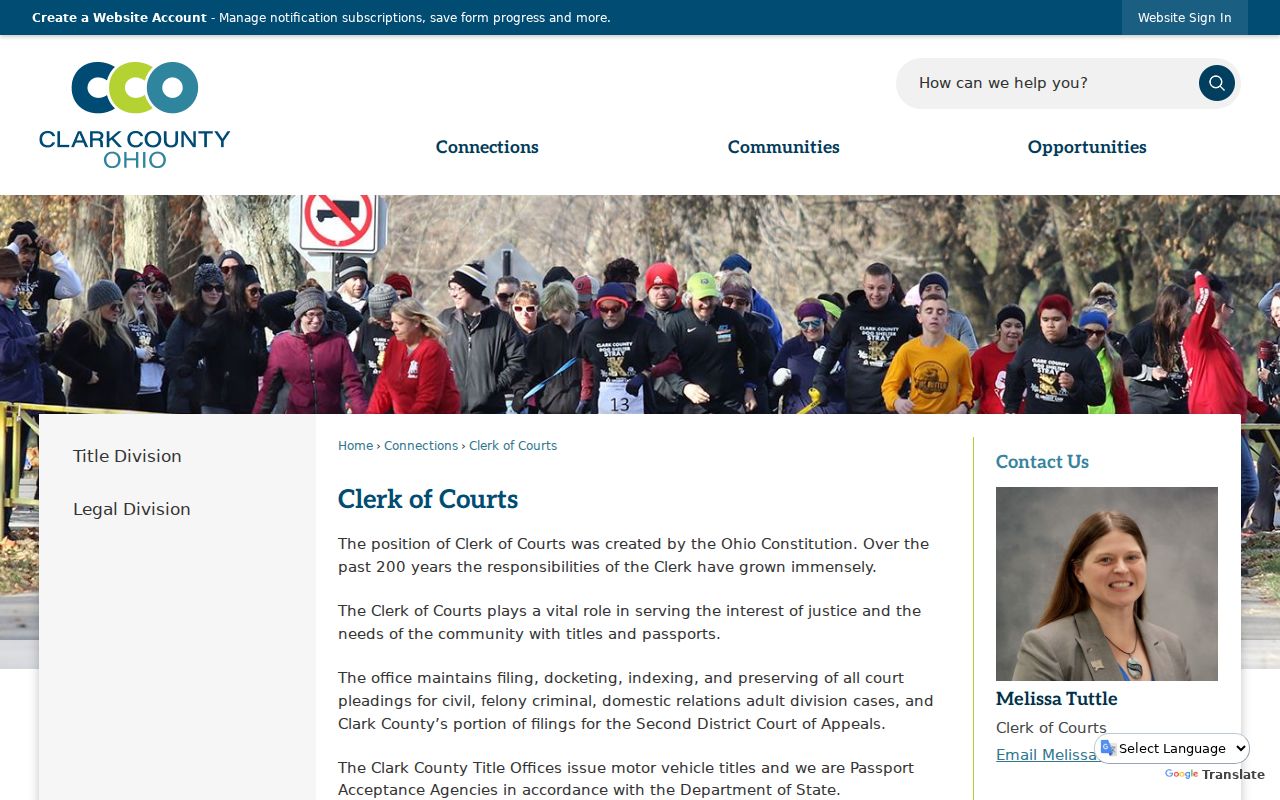
That clerk source explains the practical lesson. Any Clark County docket search must identify the correct record keeper before a general name search begins.
Clark County Court Data Is Not a Docket
Ohio public eStats reports give useful caseload context. But they cannot search an individual Clark County case. A statistics screen will not yield a docket entry, a court date, or a filed record. For those, you still need the Common Pleas, Municipal, Probate, city, or clerk route. The official numbers describe the courts in bulk. An official statistics screen can still offer no path to the specific case.
The state eStats public-report screen appears in this Clark County court docket image.
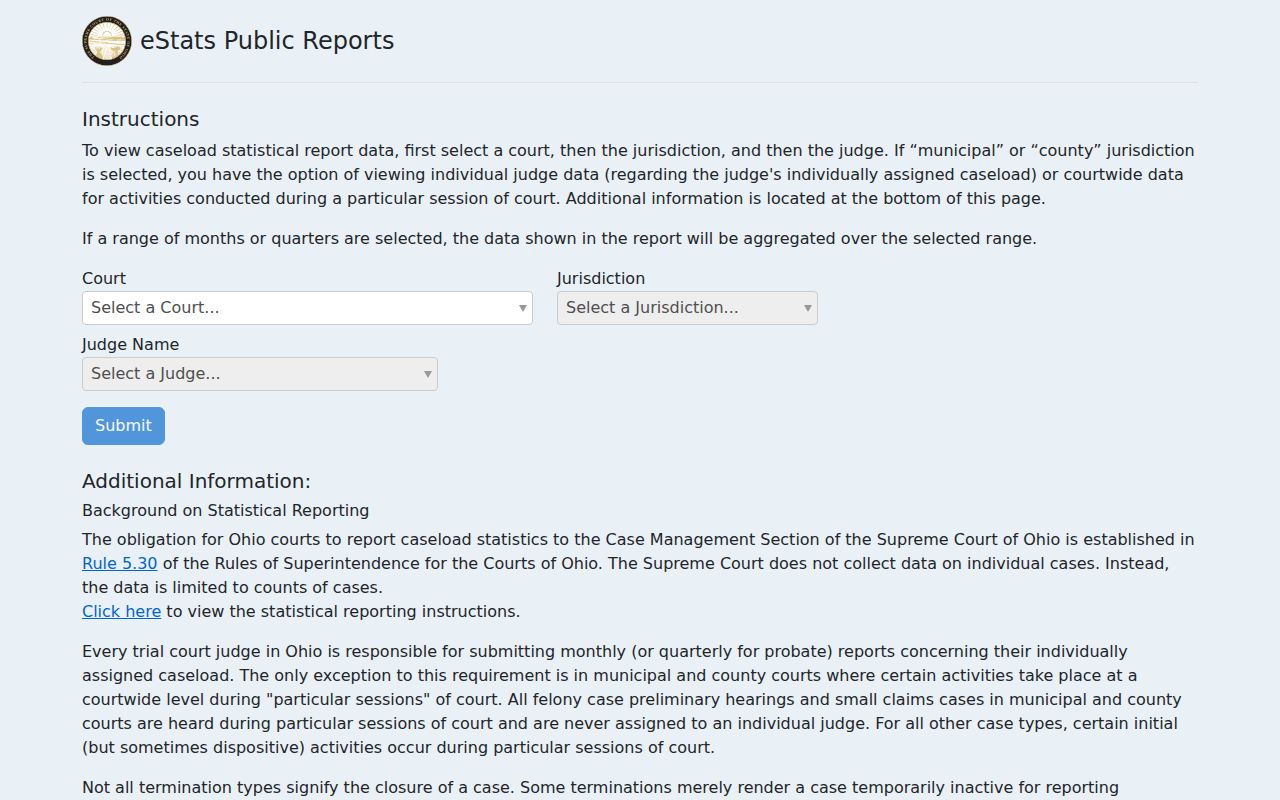
Use caseload reporting to grasp broad court activity across the state. Then return to the owning court portal or clerk for the Clark County docket itself.
Court Dates and Settings in Clark County
For Municipal cases, the Daily Schedule Search offers Schedule, Docket Results, and Criminal Arraignments views. Narrow it by Traffic, Criminal, Civil, or Parking. Date, beginning time, ending time, and judicial-officer choices help too. The calendar and the case-history search do different jobs. Use both when a date is close.
Common Pleas has no separately verified calendar search. CourtView and the applicable Clerk division remain the documented route, keeping the prior-business-day posting limit in mind. Probate runs its own search. It warns that actions can take at least 24 hours to post. See the full Clark County court schedule process for current-date checks.
Clark County Court Date Checks
The first date you see may not control. A continuance or reset often sits in the docket history right beside a later setting. Hunt for the newest dated entry that addresses the hearing. Then confirm with the court as the event draws near. Municipal Court also posts individual arraignment-continuance notices outside the routine search, so the court's current instruction can override anything older.
Read the docket history in date order. Weight, though, goes to the newest entry that speaks to your hearing. A notice can land after an earlier calendar result. One case can even carry several setting-related entries. Municipal Court's Criminal Arraignments option is a specific calendar query. The traffic, criminal, civil, and parking filters each point to different daily lists. For a Common Pleas case, compare CourtView against the clerk's current information. Web entries normally reflect the prior business day. Probate runs on its own posting clock and should be checked through its separate record route.
Note: Court building hours and clerk-counter record hours can differ. Call the proper clerk before an in-person visit.
Docket Access Under Ohio Law
Ohio court records are presumed open. Remote access is another matter. The Rules of Superintendence separate direct court access from electronic access and allow exclusions. Clark County shows the local limits clearly: Common Pleas web information lacks pre-1990 records and civil protection orders, Probate posts on a delay, and Juvenile follows a separate restricted route.
Key Ohio court-record rules.
Rules of Superintendence 44–47 set the public-access framework for court records.
Ohio R.C. 2303.12 addresses Common Pleas general-docket and case-file records.
Ohio R.C. 2303.901 defines case documents while excluding personal identifiers and restricted material.
Ohio R.C. 2953.32 governs eligible sealing or expungement procedures.
A screen image is not a certified copy. Sealed or expunged cases, juvenile material, adoption or mental-health material, personal identifiers, and court-restricted documents may be unavailable or redacted.
Clark County Docket Access Limits
Ohio's current public-access rules live at the state level. The Ohio Rules of Court page is the state source for those rules. Ohio's public-record statute matters as government-records law, but court case-record access is principally governed by court rules.
Start with the court that owns the record. Then ask that court's clerk about direct inspection, a copy, certification, or a restriction. The rules on that official page set the access standards. They govern any Clark County court docket question.
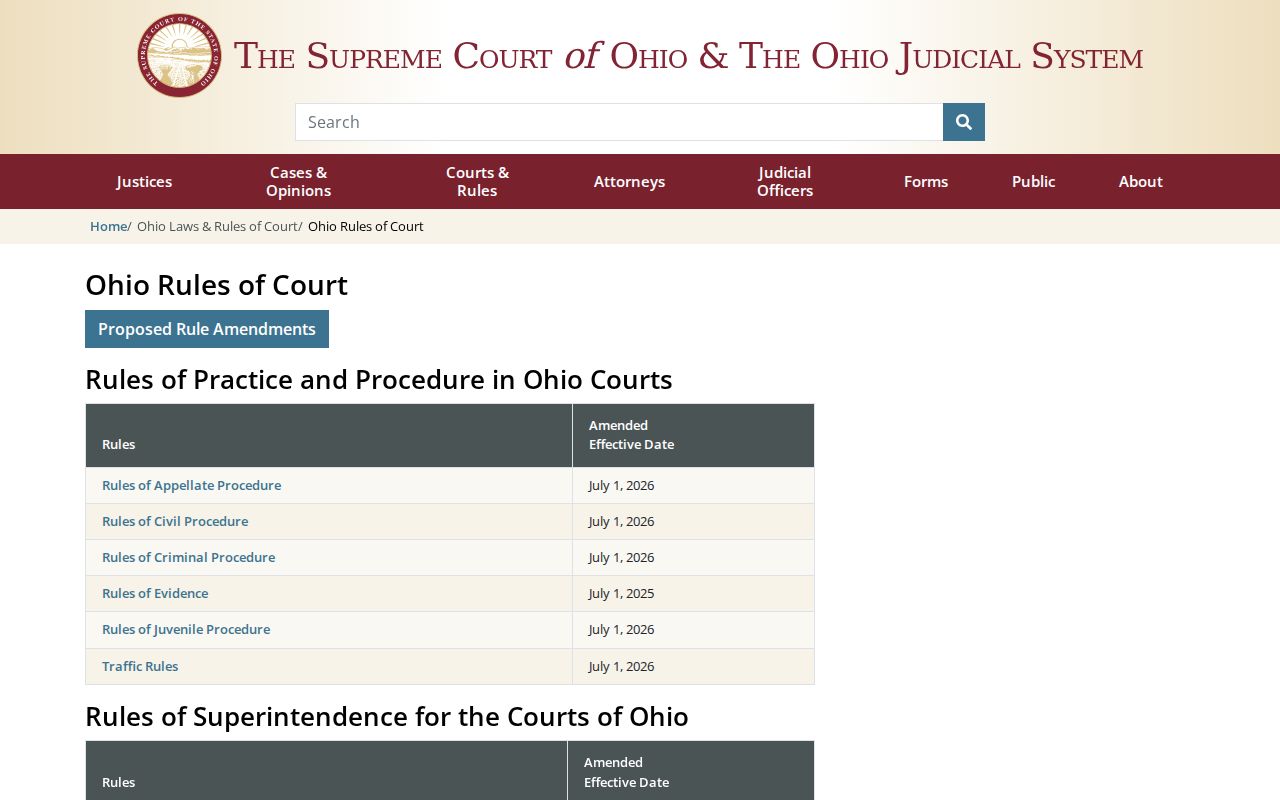
A missing docket result is not proof that no docket exists. Before drawing that conclusion, check the court type, the date coverage, and any posting delay.
How the Clerk Keeps Docket Records
Melissa Tuttle serves as Clark County Clerk of Courts. Her office handles filing, docketing, indexing, and preservation for Common Pleas civil, felony criminal, adult domestic-relations, and county Second District appellate matters. The Legal Division is the fallback for a CourtView problem. Bring it an older record, a recent filing, a protection-order question, a request for direct inspection, or a copy. Common Pleas rules allow examination during regular hours. Copies come on request with the applicable photocopy fee.
Clark County Clerk of Courts, Legal Division
101 North Limestone Street, second floor
Springfield, OH 45502
937-521-1680
Monday through Friday, 8:00 a.m. to 4:30 p.m.
Municipal and Probate records sit outside that office. When you request a docket or copy, give the court, the case number or names, the approximate year, and whether you need a plain or certified copy.
Clark County Federal Docket Routes
Federal cases live outside Clark County state-court docket systems. Civil and criminal federal matters run through the Southern District of Ohio and PACER. Bankruptcy goes to a separate federal court. That court is the Southern District of Ohio Bankruptcy Court. Do not expect a federal case in CourtView or Municipal Case Search. Proximity to Springfield does not change that.
The Southern District of Ohio site is the district's entry point. That official page anchors this Clark County court docket comparison of federal and county routes.
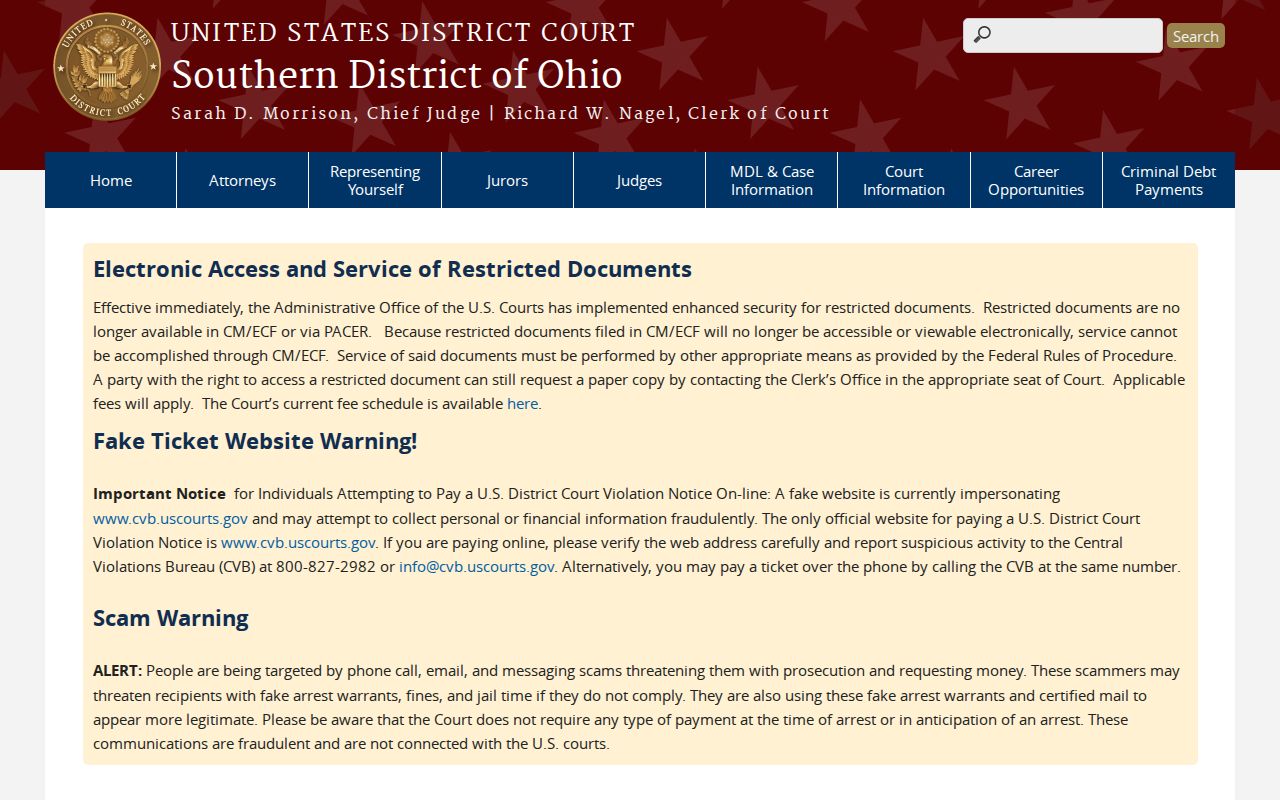
That federal route never touches the county clerk's civil and criminal records. For electronic federal-record access, PACER access options explain the available routes.
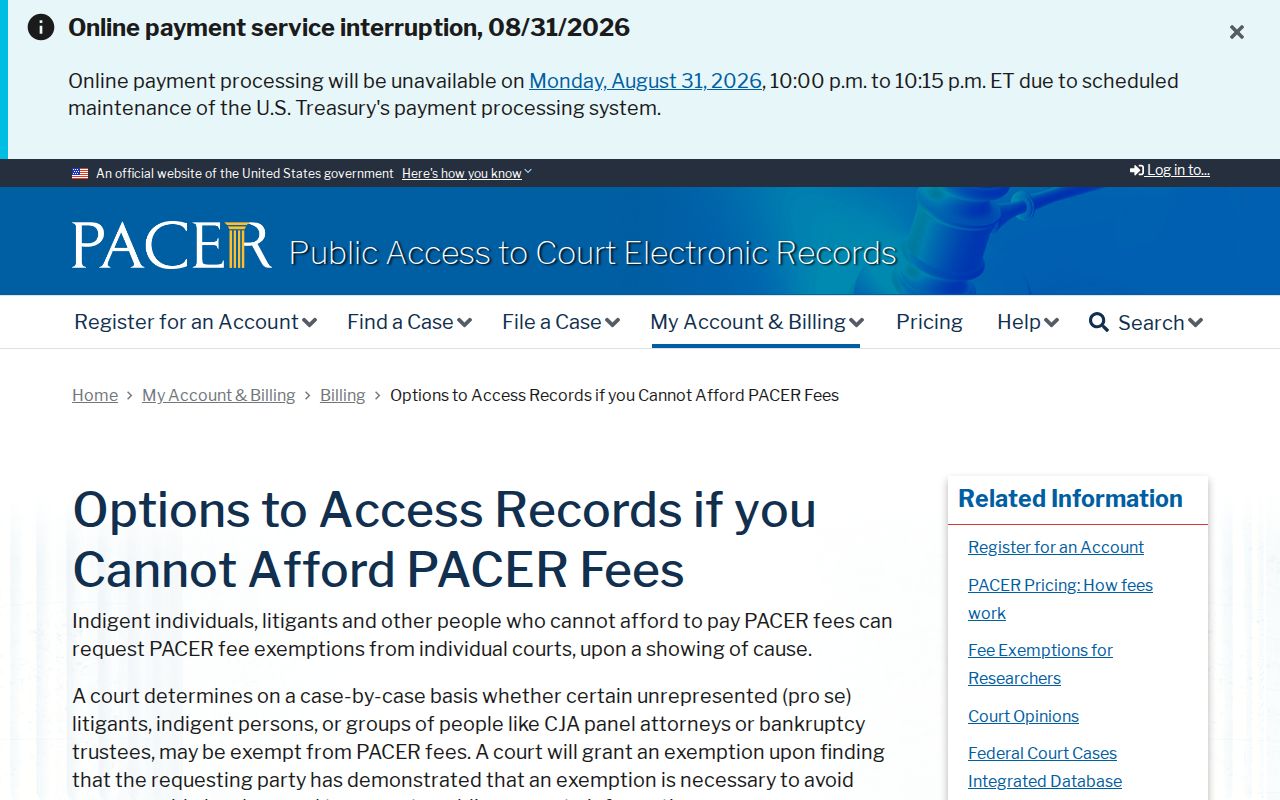
A state-court matter belongs to the official Clark County route, not PACER. The Southern District of Ohio Bankruptcy Court maintains its own separate bankruptcy docket path on that official page.
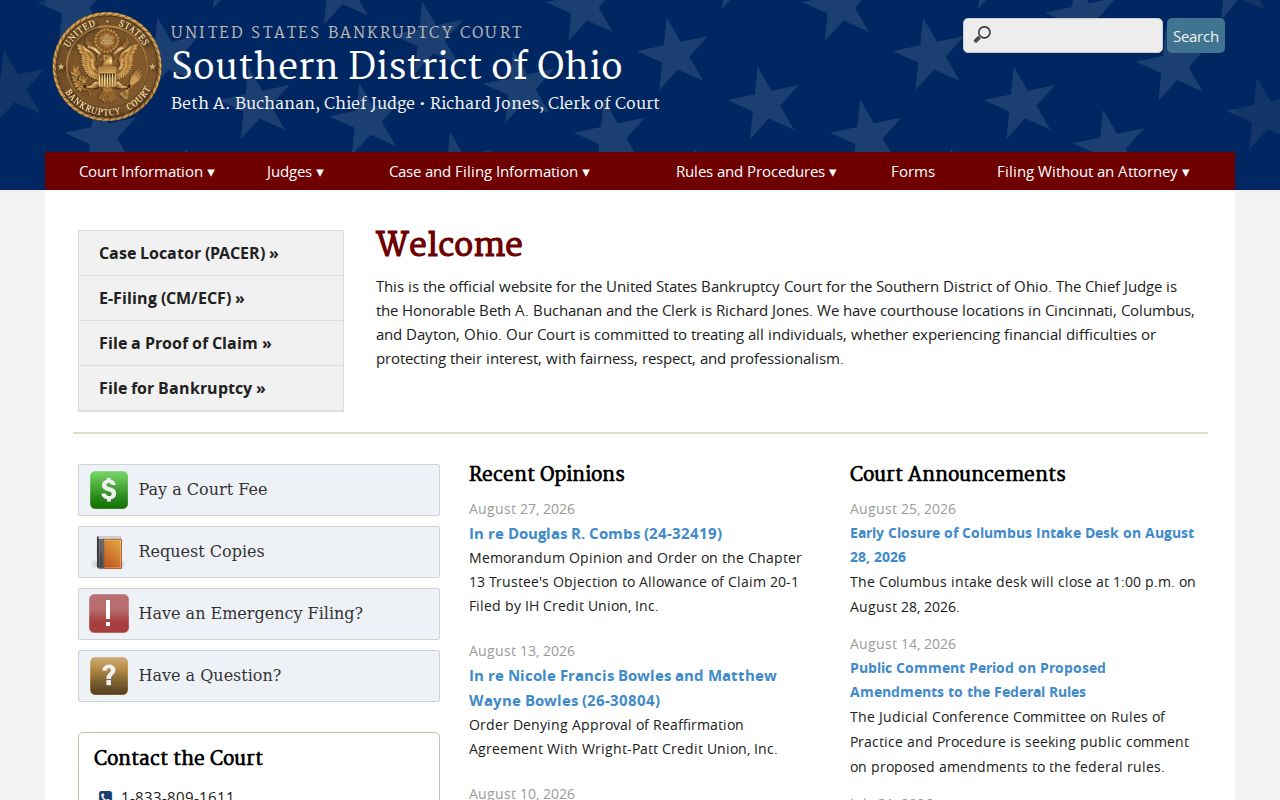
Keeping county, city, state, and federal channels distinct makes docket searches more reliable.
City-by-City Court Dockets in Clark County
Springfield defers to the countywide Municipal Court for case and date questions. New Carlisle, Enon, South Charleston, and North Hampton each run city-linked Mayor's Court routes. These handle local traffic and ordinance matters. A Mayor's Court is not a court of record. An appeal or transfer from one can still create a Municipal Court record. The city profiles rely on Ohio Development's 2020 Census ranking.
Springfield Court Records
58,662 residents · Municipal Court route.
New Carlisle Court Records
5,559 residents · Mayor’s Court portal and appeal route.
Enon Court Records
2,449 residents · Mayor’s Court schedule and portal.
South Charleston Court Records
1,706 residents · Mayor’s Court docket and court-date route.
North Hampton Court Records
457 residents · Mayor’s Court portal and village fallback.
Check the court printed on the citation first. That matters most when a Mayor's Court case moves into the county court of record.
Clark County Docket Search Fallbacks
A failed first search is not the end. Match your fallback to the court. Common Pleas search issues, older cases, and certification requests belong with the Clerk of Courts. Municipal traffic, criminal, civil, parking, trusteeship, and TPO questions are different. Those go to the Municipal clerk or case division. Probate keeps its own Record Search and court counter. Juvenile follows separate confidentiality limits. A city Mayor's Court portal serves only its city and case type.
A clear request names the Clark County court and the caption names. Add an approximate year and the case or citation number. Say whether you want a docket, a document, or certification. That detail helps the clerk find the right record. It also keeps you from treating a public search result as the complete file.
Note: The local court that maintains a record is the best source for a current setting. The same court handles a restriction decision or a certified copy.
Map and Directions to the Clark County Common Pleas Courthouse
Common Pleas civil, felony-criminal, and adult domestic-relations docket files are kept at the historic Clark County Common Pleas Courthouse, 101 North Limestone Street, in downtown Springfield. The Clerk's Legal Division counter is on the second floor. The county's own annual reports describe the 1918 building's roof, masonry, and clock-tower restoration and a large 2024 remodel permit, so a visitor may encounter active construction. Domestic Relations has a separate lower-level counter nearby at 31 North Limestone Street; confirm the correct address before traveling for a domestic-relations matter.
Clark County Clerk of Courts, Legal Division
101 North Limestone Street, second floor
Springfield, OH 45502
937-521-1680
Monday through Friday, 8:00 a.m. to 4:30 p.m.
Domestic Relations Division
31 North Limestone Street, lower level
Springfield, OH 45502
937-521-1693
No public-terminal count, locker policy, or accessibility procedure is published for this courthouse, so a caller with a specific access question should confirm it with the Legal Division at 937-521-1680 before the trip. Case files may be examined during regular hours but cannot be removed from clerk custody, and copies are available on request with the applicable photocopy fee.