
Clark County Criminal Docket Searches
Clark County splits its criminal docket work by offense level and stage. Felonies that reach the Court of Common Pleas start with Common Pleas CourtView. That is the public starting point. Misdemeanors, plus felony preliminary-hearing activity, sit in the Municipal Court’s Case Search under its Criminal category. A Mayor’s Court citation or a juvenile matter runs on its own track. Never assume either adult search will show it.
Begin with the court name printed on the notice, citation, or prior docket paper. Keep the case number, the names, and the rough year in hand. CourtView asks you to complete a displayed CAPTCHA before searching. Its online docket can lag behind a filing. Municipal computer records reach back to 1990. If nothing comes back, use the clerk channel. Do not read a blank screen as proof that no criminal case exists.
- Classify the matter as felony, misdemeanor, preliminary felony activity, traffic-related criminal matter, Mayor’s Court case, or juvenile case.
- Use Municipal Case Search for a misdemeanor or preliminary hearing, selecting Criminal or Traffic as the record requires.
- Use the Common Pleas public route for a felony docket and complete its CAPTCHA through the approved screen.
- Open the matching case and read the latest dated setting, continuance, order, or final entry before relying on an older event.
- Contact the clerk for a recent, older, restricted, or certified criminal record.
Clark County Criminal Arraignment Calendar
The Municipal Court also keeps a Daily Schedule Search. Its query choices include Schedule, Docket Results, and Criminal Arraignments. You can narrow it by case category, date, start and end times, and judicial officer. This calendar tool pairs with a case-history search, not replaces one. It works best for a misdemeanor arraignment coming up soon. It also suits a felony still in its early Municipal stage.
The filters are public. The result columns are not. Search the schedule, then pull the case docket itself with a specific identifier. Hearing dates can change outside the routine screen. So verify any near-term Clark County criminal docket setting with the Criminal/Traffic line or the clerk whenever court directions clash with what the web shows.
The Municipal Court divisions page identifies the local criminal and traffic responsibilities. 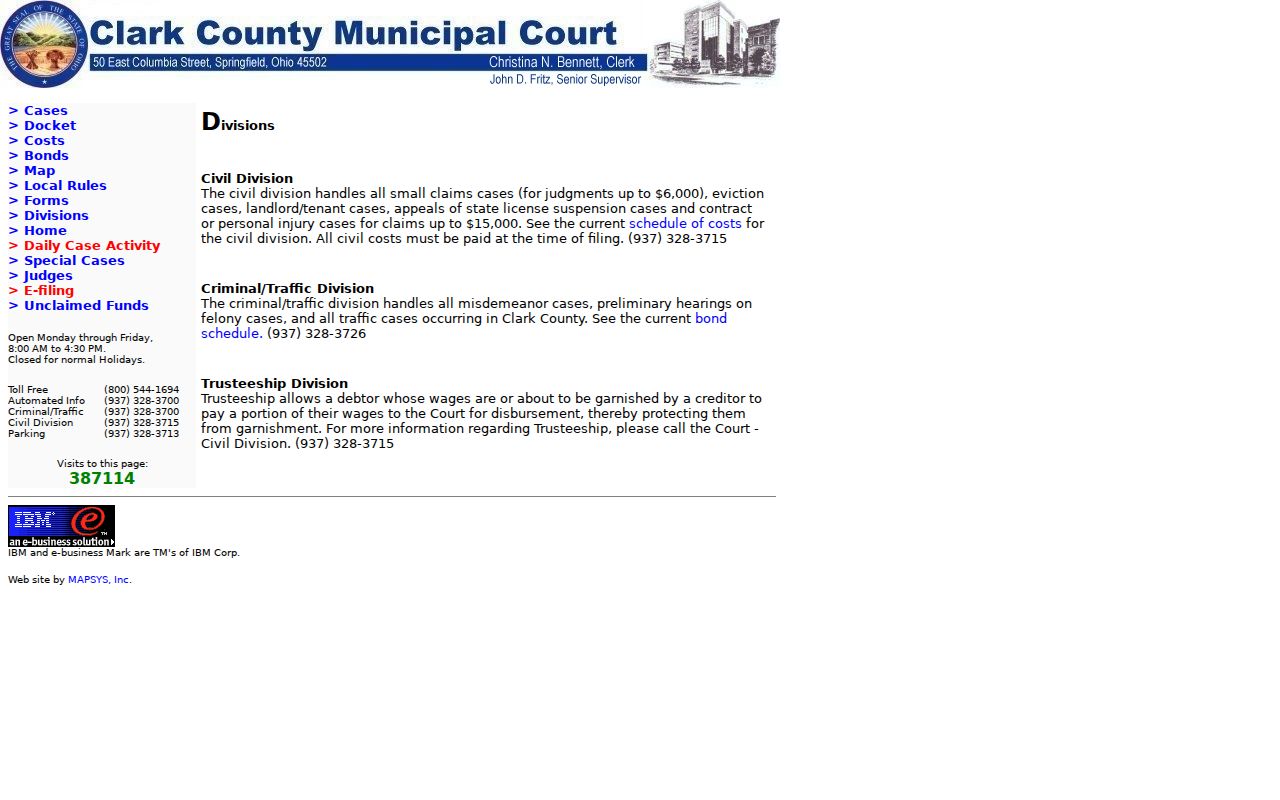 That division split explains why a Municipal arraignment search and a Common Pleas felony docket may both matter in one matter’s timeline.
Criminal Dockets: What They Show
The Common Pleas local rules describe the clerk-held appearance docket rather than any particular public screen. Read a criminal docket with care. Start with the caption and case type, then work through parties and counsel, filings and service, settings and continuances, and finally any decision and the closing entry. The public search makes no promise that every underlying document image is online. The docket tells you what happened. The paper tells you why.
| Case number | An annual criminal serial number in the Common Pleas appearance docket; Municipal uses a displayed 99/12345/1 Year/Case/Count example. |
|---|---|
| Caption and case type | Identifies the nature or purpose of the case as the clerk records it. |
| Parties and counsel | Ohio law supports entries for party and counsel names, process, papers filed, returns, and filing dates. |
| Setting history | Pretrial and trial-setting information, plus continuances, show when an event moved. |
| Decision or final entry | The dated docket record of a decision, verdict, or final entry, subject to the court’s access rules. |
The Ohio appearance-docket statute is the source for those clerk-record categories. 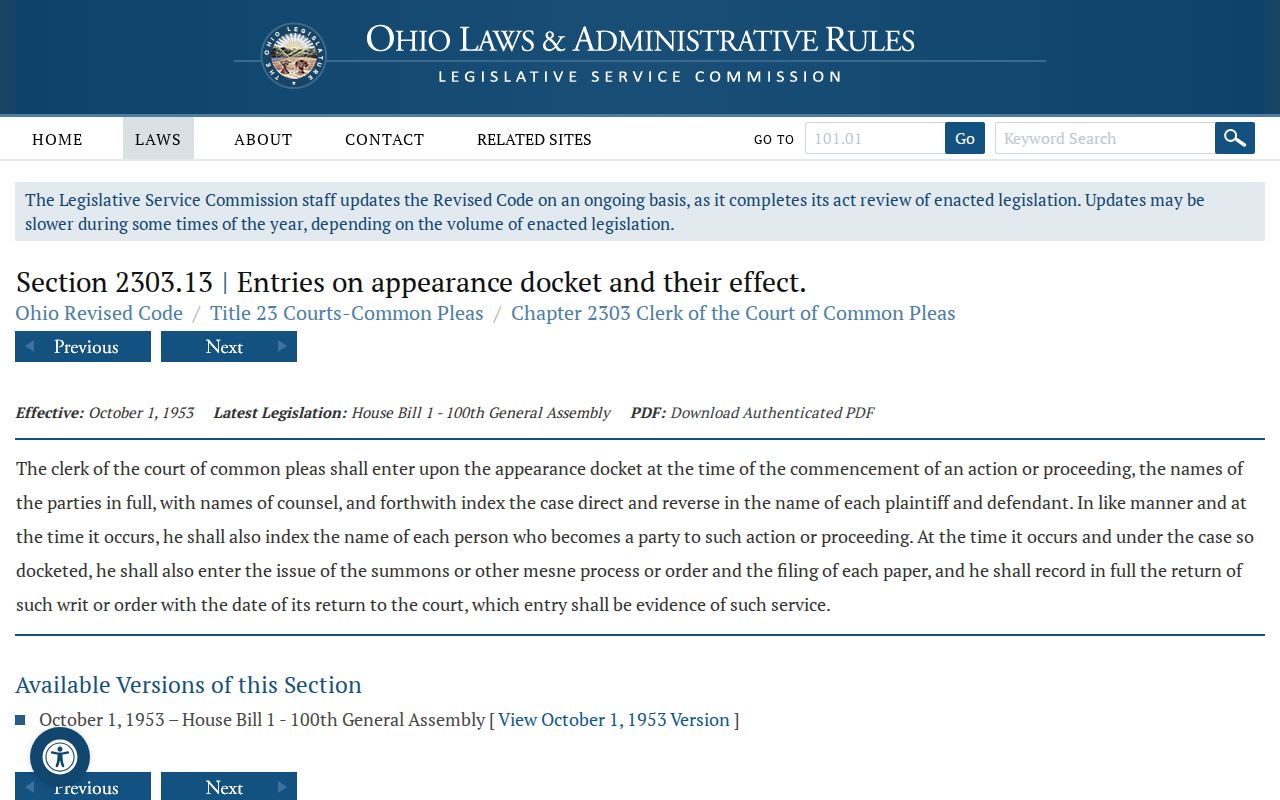 It supports reading dated court activity without inventing charge, bond, document-download, or disposition fields that were not observed in a local public case.
Clark County Felony Docket Transfer
A felony in Clark County can have two local chapters. Municipal Court holds the preliminary hearings. Once the case proceeds, the Common Pleas Clerk Criminal Department keeps the felony file. That file runs from indictments and arraignments to subpoenas and notices of appeal. One name can therefore leave a Municipal preliminary record plus a later Common Pleas docket. Each sits under its own court identifier. Search both.
Check the latest entry and court before assuming a case remained in Municipal Court. Municipal’s Criminal/Traffic Division also handles all misdemeanors and county traffic matters, while Common Pleas has the general criminal jurisdiction for felony prosecution. The Common Pleas criminal-jurisdiction statute anchors that division of work. 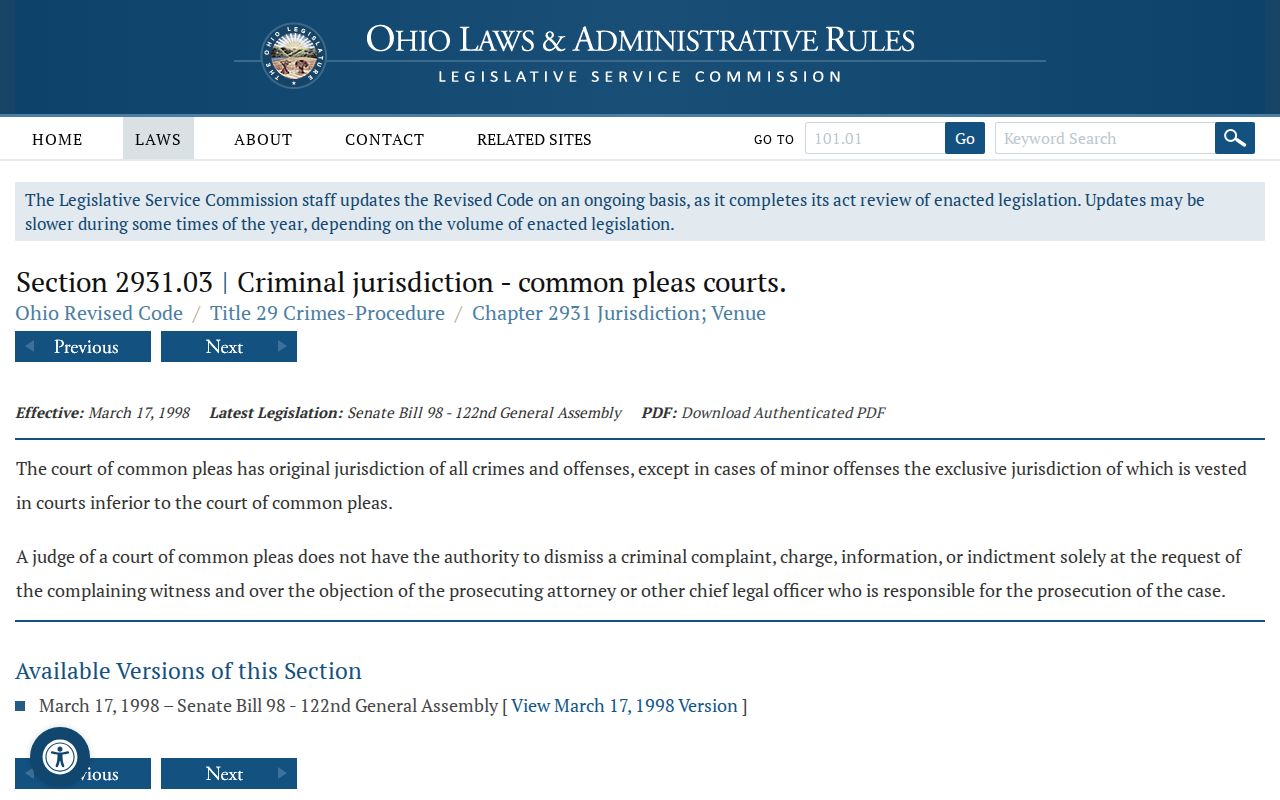 A transfer is a routing fact, not a missing record.
Criminal Case Stages on the Docket
A felony typically moves from early Municipal activity to indictment, then Common Pleas arraignment, pretrial settings, further filings, a plea or trial, and a final entry. A misdemeanor usually stays on the Municipal criminal path unless some other law shifts its venue. The docket runs in date order, so the most recent dated event is your best clue to what happens next.
Docket flow: Filing or preliminary hearing → Indictment where applicable → Arraignment → Pretrial → Plea or trial → Disposition or sentencing.
Context makes the terms clear. An indictment charges a felony. An arraignment opens the plea process. A continuance means a setting moved. A final entry is the clerk-recorded court action that resolves all or part of a case. Clark County publishes no complete disposition-code legend for its criminal docket, so read any label alongside the actual docket entry and the court order behind it.
Recent Clark County Criminal Filing Delay
A brand-new Common Pleas filing may not show up that same evening. The Legal Division updates its web information nightly. It is normally current through the prior business day. Reflection of a filing or judicial action can take time. Nothing before 1990 is online. E-filing exists but is not mandatory. Clerk acceptance controls when a submission is filed, stamped, and docketed.
For a recent felony filing, an older case, a correction, a protection order, a document image, or a certified disposition, call the Clark County Clerk Criminal office at 937-521-1684. Or visit the counter at 101 North Limestone Street during posted hours. The Legal Division notice beats any guessed refresh schedule. A prior-business-day record still helps. But for a time-sensitive filing the clerk is the channel that verifies.
The Municipal Court local-rules source documents the separate local court system. 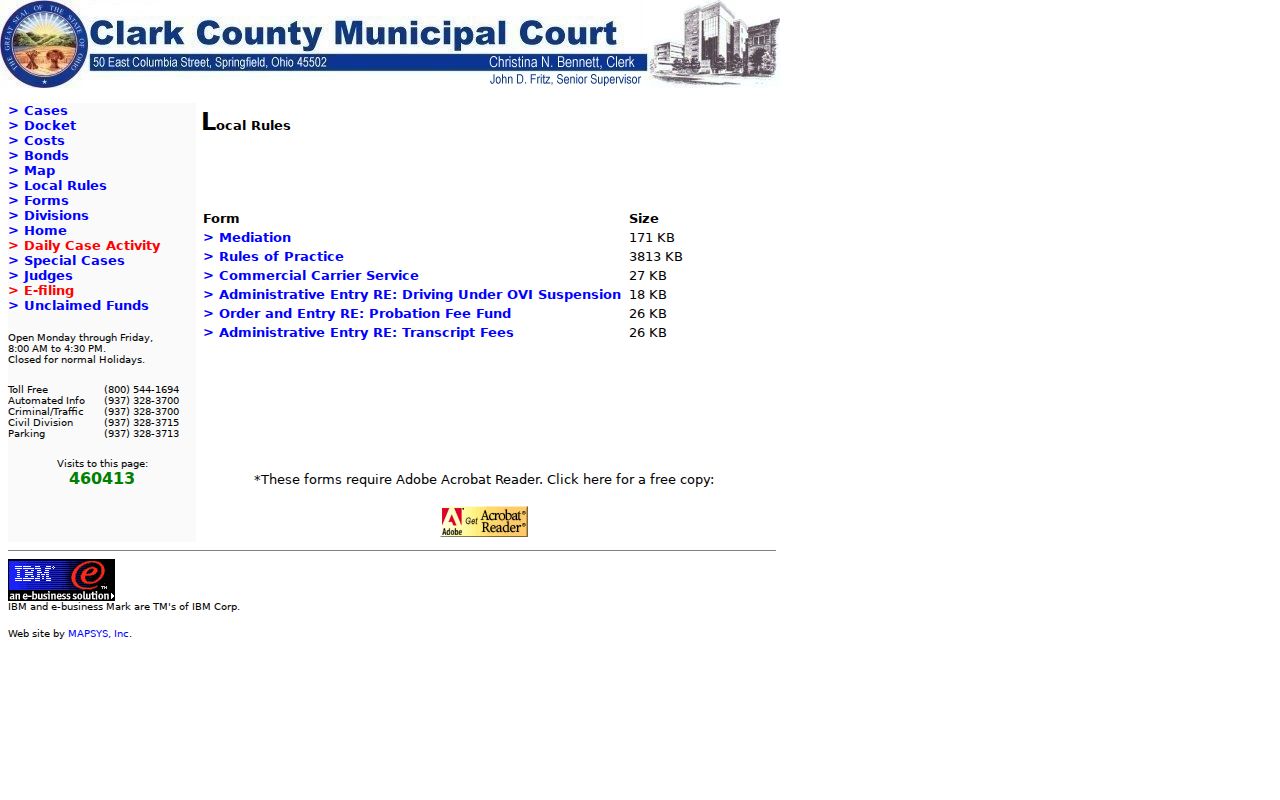 It reinforces that criminal record access must follow the court that owns the case, not a single countywide database assumption.
Clark County Criminal Docket Courts
Felonies in Clark County belong to the Common Pleas docket, and the Clerk's Criminal Department can help you pull the record directly. Misdemeanors, countywide traffic cases, and preliminary felony hearings all run through Municipal Court instead. A Mayor's Court handles local ordinance and traffic matters. It keeps no formal record of its own. An appeal from there lands in Clark County Municipal Court. Juvenile allegations take yet another route. That one comes with serious confidentiality limits.
Knowing this split saves you from a common mistake. Say a felony search of the Municipal Criminal category comes up empty. That tells you nothing about the Common Pleas side. A Common Pleas hit works the same way, since it never substitutes for the Municipal calendar when you need a preliminary hearing date. The court-selection steps on the Clark County Docket Search page walk a name or case number search across both routes.
Clark County Criminal Clerk Channel
The Clerk of Courts keeps the felony docket. Its Criminal Department processes indictments, arraignments, subpoenas, and notices of appeal. When you contact the office, give the court, the case number if you have it, the names involved, and a rough year. Say whether you want the docket, one specific document, or a certified copy. Those specifics let the clerk route a Common Pleas request correctly rather than into Municipal, Probate, Domestic Relations, or Juvenile records.
The local Common Pleas rules allow you to examine a case file or original document during regular office hours. Files stay in the clerk's custody. Copies are available on request for the photocopy fee. The rules do not spell out one universal mail form, a set copy price, or a guaranteed turnaround. So call ahead before you pay or travel. That matters most for a specific or restricted item.
Access Rules for Criminal Dockets
Ohio opens its court records with a public-access presumption. But searching from home and inspecting a file at the courthouse are two different things. Clark County CourtView keeps civil protection order information off its online public route. Juvenile material, personal identifiers, sealed or expunged cases, and anything a judge, statute, or court rule has restricted may simply not appear. A blank result can mean a restriction. It can also mean an older record, a posting delay, or the wrong court.
Ohio criminal-record access rules:
Ohio public-access rules presume access while recognizing exclusions and limits on remote access.
Ohio R.C. 2303.12 governs Common Pleas general-docket and described online-record duties.
Ohio R.C. 2953.32 supplies the sealing and expungement procedure, with eligibility and exception limits.
The sealing-law source explains why restrictions change access and index treatment. 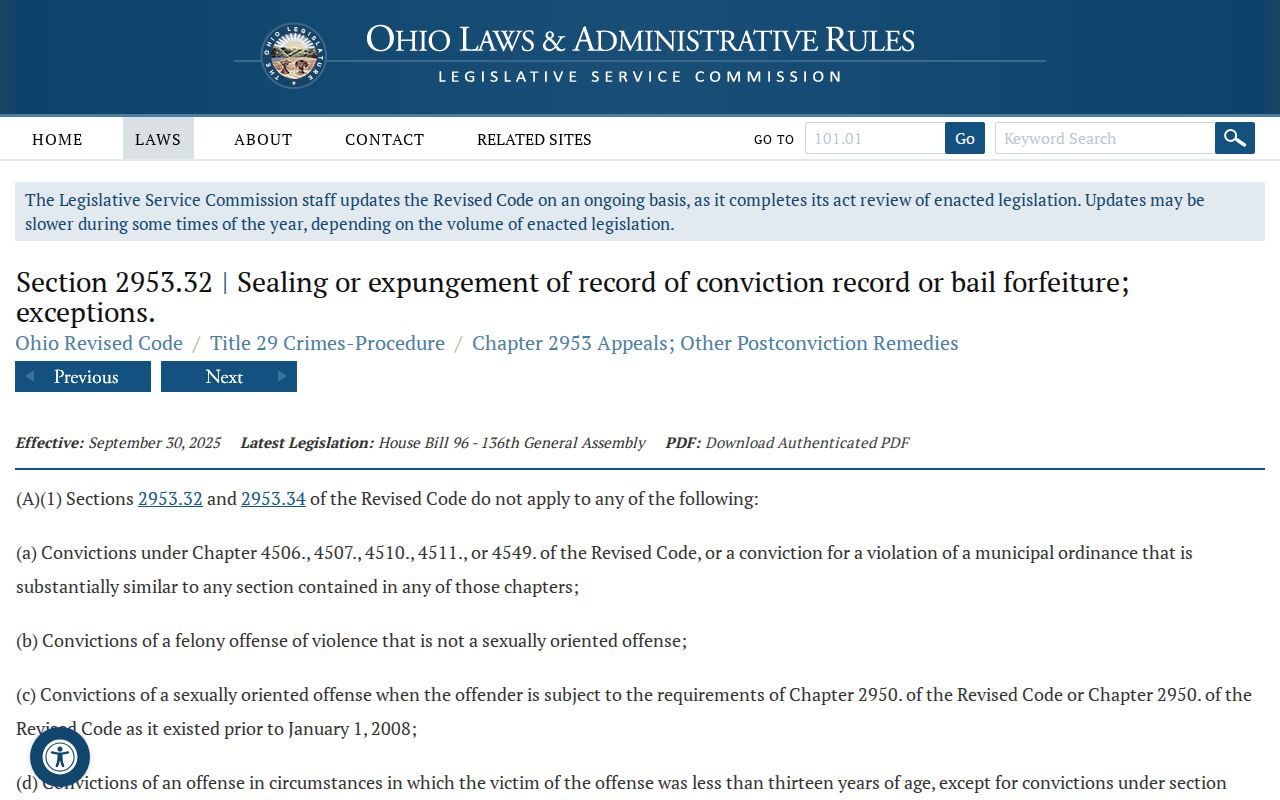 A public portal cannot override a sealing order or a separate Juvenile Court confidentiality rule.
Clark County Criminal Record History
Clark County's online criminal coverage has a cutoff. Records before 1990 do not appear on the Common Pleas Clerk's website. Municipal Court says its computerized records start in 1990. Those limits apply to the web only. The clerk's older files still exist. A historic criminal docket may call for the court, the names, a rough year, and a direct request to whichever clerk holds the record.
For felony material predating the online system, the Legal Division is the documented fallback. An old Municipal misdemeanor or traffic-related criminal case starts with Municipal Court case information. Keep an older adult record out of the Juvenile route. Treat an empty internet result as saying nothing about the current status of a sealed or expunged case. The court can point you to the right channel for a specific file.