
Clark County Civil Docket Searches
Know the court first. That choice points you to the right Clark County civil docket. It does so before any search box appears. For general civil and foreclosure work, the Common Pleas CourtView route is the public entry point. The Municipal Court’s Case Search has a Civil category. It covers that court’s own cases. Adult domestic relations goes through the Common Pleas Domestic channel. Estate, guardianship, marriage, trust, and name-change records live in the separate Probate search.
Search with a party name or a case number when you have one. CourtView needs its CAPTCHA. After nightly updates, it is normally current through the prior business day. Municipal electronic records go back to 1990. A failed name search in one court does not mean no Clark County civil case exists. The filing may sit in a different civil division. It may instead need a clerk-counter request.
- Identify the civil claim type, amount, and court named in any notice or case paper.
- Search Municipal Civil for eligible lower-level civil matters, or CourtView for Common Pleas general civil records.
- Use the separate Domestic or Probate route when the record category requires it.
- Read the chronology for service, response, setting, continuance, decision, and final entry.
- Ask the clerk for a specific order, judgment, or certified copy when the docket is not enough.
Clark County Municipal Civil Limits
Municipal Court handles small claims up to $6,000. It also covers evictions, state-license-suspension appeals, and contract or personal-injury cases up to $15,000. Ohio’s general municipal civil ceiling is $15,000. The split works as a practical search rule. A $6,000 small claim is not just a shorter Common Pleas case. A claim above Municipal jurisdiction needs the Common Pleas civil route. That holds unless another division controls it.
| Civil matter | Clark County docket route | Local detail |
|---|---|---|
| Small claims | Municipal Civil | Local source states up to $6,000. |
| Eligible contract or injury claim | Municipal Civil | Up to $15,000 under the court’s stated jurisdiction. |
| General civil or foreclosure | Common Pleas Civil | CourtView plus Clerk Civil fallback. |
| Adult domestic relations | Common Pleas Domestic | Separate department and access route. |
The Municipal civil-jurisdiction statute is the official legal anchor. 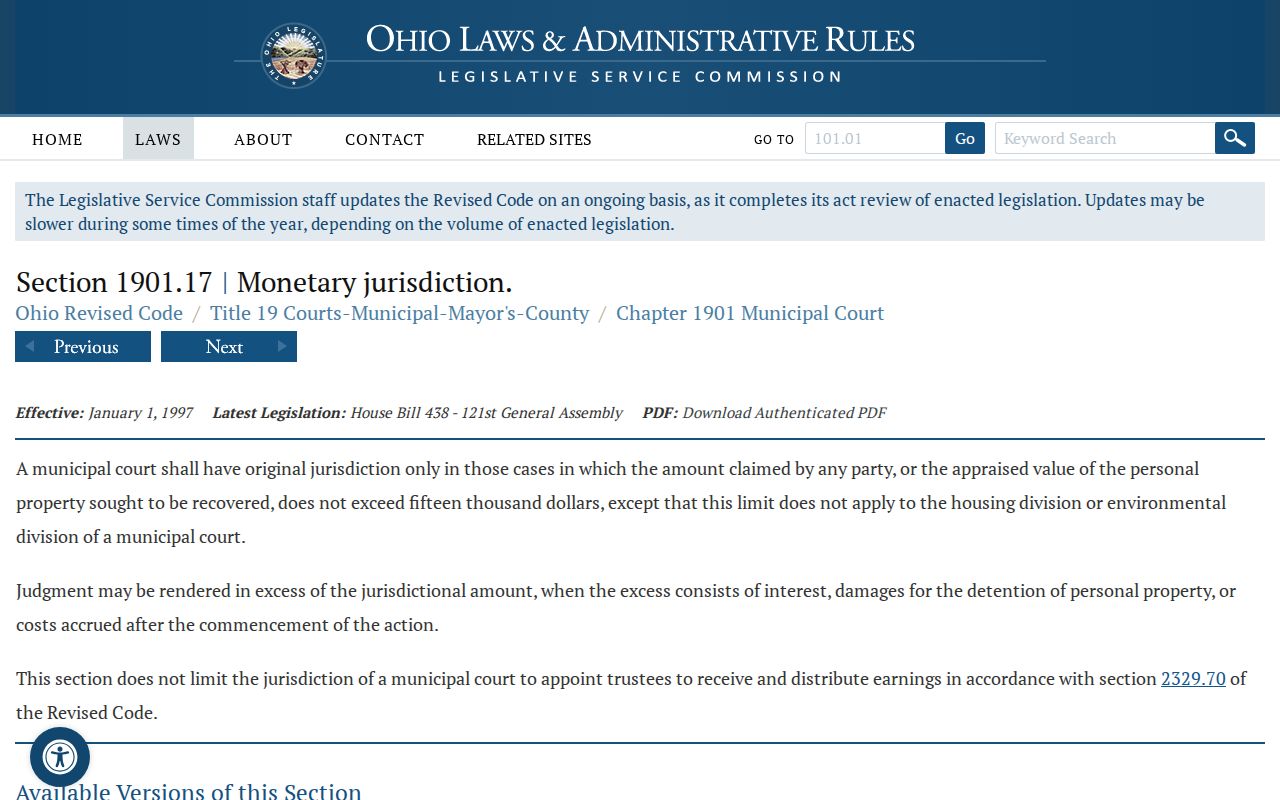 The monetary threshold helps choose the search channel, but the exact case type and court caption still control.
Civil Dockets: What They Show
Common Pleas local rules describe an appearance docket. It records filings, process, assigned judge or court, case type, pretrial and trial settings, continuances, a decision or verdict, and the final entry. Ohio law backs that up. Entries may also cover parties, counsel, issued process, papers filed, returns, and filing dates. Those clerk-held fields are the reliable Clark County civil docket inventory.
| Caption or style | The case title identifies the parties and the nature of the civil action. |
|---|---|
| Case number | The annual serial identifier that distinguishes the court file. |
| Process and filings | Issued summons, papers filed, returns, and their dates can be appearance-docket entries. |
| Case setting | Pretrial or trial-setting information and any later continuance. |
| Final entry | The dated court action resolving all or part of the case. |
The statutory definition of a case document includes pleadings, motions, orders, judgments, dockets, and indices, while excluding personal identifiers and restricted material. 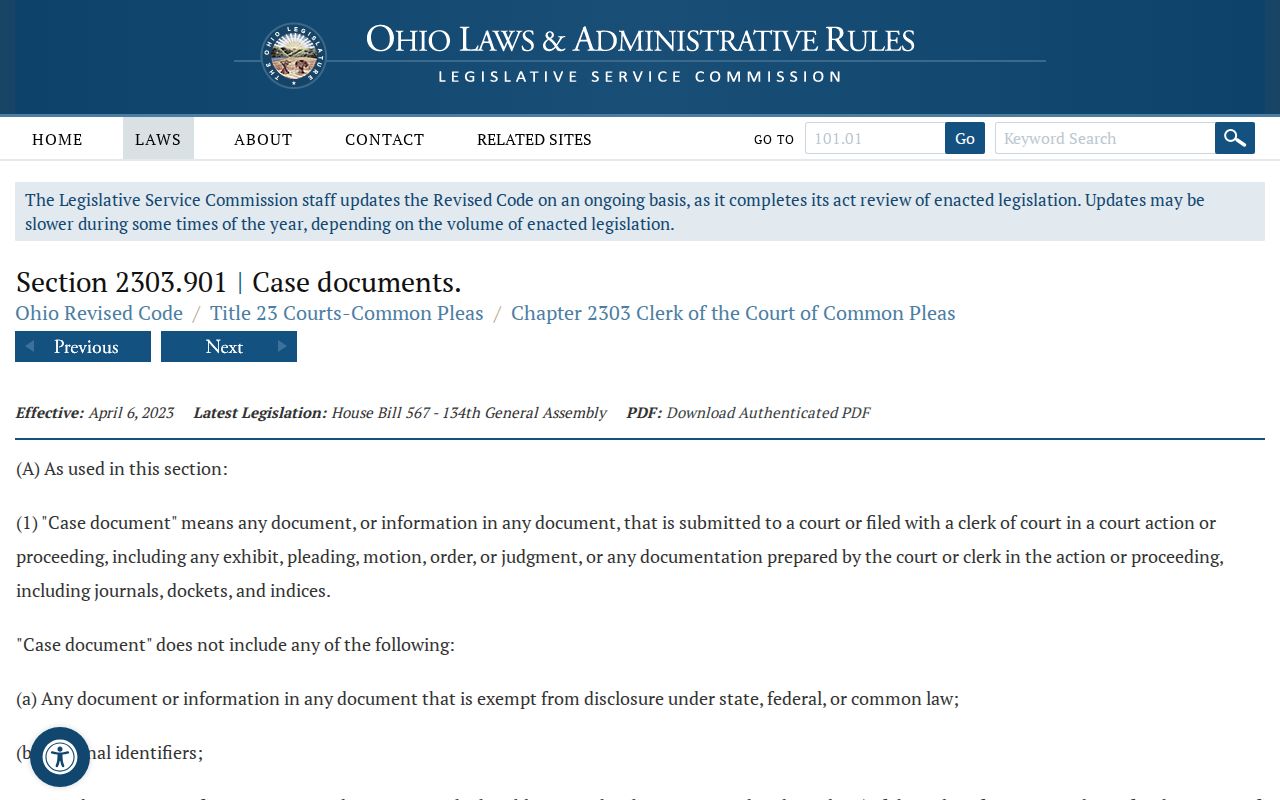 A docket entry points to activity; it does not prove every item is remotely available.
Clark County Civil Records Routes
Civil, domestic relations, and probate records are not one portal. Common Pleas Civil accepts complaints. It issues summonses and subpoenas and maintains case files, judgment liens, and sale-related work. Domestic Relations has its own Clerk route. Probate runs separately under a judge who also acts as clerk. It keeps its own Record Search. That separation matters. One family name can surface in several types of court records.
Municipal Court’s forms index shows the local range of Municipal Civil work, including small claims, forcible entry and detainer, rent escrow, writ-of-restitution, and voluntary-dismissal materials. 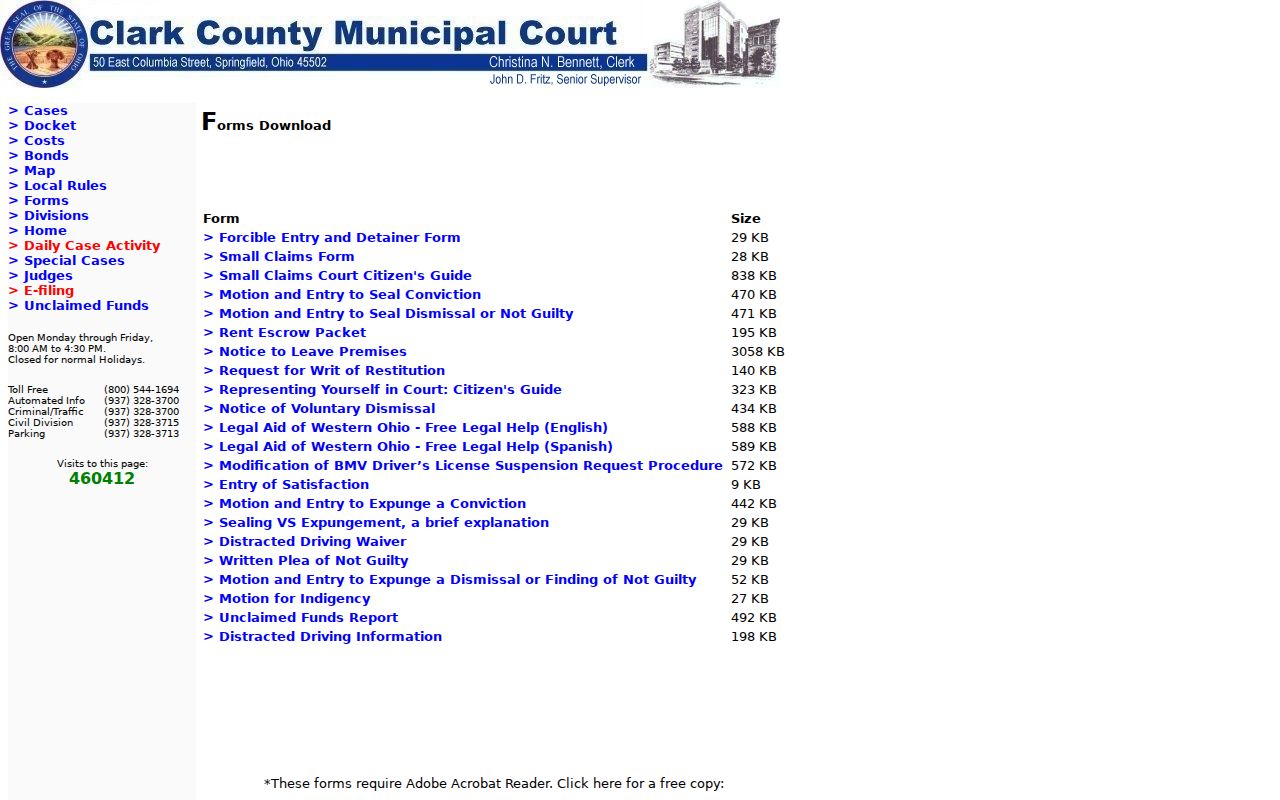 Forms are procedural materials, not a substitute for the clerk’s current docket or a request for a filed document.
What Cases Fill the Civil Docket
Clark County civil dockets vary by court. Common Pleas Civil covers general civil complaints, foreclosure, judgment liens, and related matters. Municipal Civil takes qualifying lower-level claims, small claims, eviction, and the stated appeals. Common Pleas Domestic maintains adult domestic-relations cases. Probate holds estate, guardianship, adoption, marriage, mental-illness, trust, and name-change matters. Access to certain record types is limited.
A claim description alone will not get you there. Use the case caption, the court, and the filing year. That keeps records from blurring across routes. A Municipal eviction docket has a different procedural history than a Common Pleas foreclosure. Neither matches a Probate estate record.
Clark County Municipal Civil Activity Warnings
Municipal civil rules carry a local caution that not every civil system has. They impose a six-month no-service rule and a six-month no-activity rule. A 10-day dismissal warning follows. Good cause can prevent it. After a response, the court sets pretrial or other dates. A continuance requires a written motion stating the reason.
This gives context to a quiet Clark County civil docket. A quiet stretch may matter. It is not an automatic sign the case was dismissed. Read the actual docket, any notice, and the most recent entry before concluding anything. A continuance only moves a setting. The history may still display the earlier date.
Hearings on the Civil Docket
Civil docket stages usually run from complaint and service to a response. Next come motions, case management or pretrial. Then a trial or dispositive decision. Finally comes a judgment or final entry. Clark County Common Pleas rules support that sequence through their docket-field description. Municipal rules add their own point: dates and continuances are case-management events. The first date listed is not a promise the case will move then.
For a time-sensitive setting, read the newest dated entry first. If the online record looks stale or unclear, use the proper clerk channel. The court named on the docket controls the contact. Common Pleas Civil is reached through the Clerk Civil division. Municipal Civil has its own court clerk and case information line. Remember that CourtView updates nightly. A newly filed Common Pleas change can require clerk confirmation.
Clark County Common Pleas Civil Files
Springfield's Common Pleas Clerk runs a Civil Division. It keeps the court docket for civil cases. The staff files complaints, issues summonses and subpoenas, and manages judgment liens and sale paperwork. Call the civil desk at 937-521-1697 with questions. The Legal Division counter sits at 101 North Limestone Street. When you contact the office, ask for the specific civil record you want, not a vague case file. Naming the document speeds things up. That holds whether it is old, certified, or simply missing from view.
The Common Pleas civil-jurisdiction statute supplies the state-level civil-jurisdiction anchor. 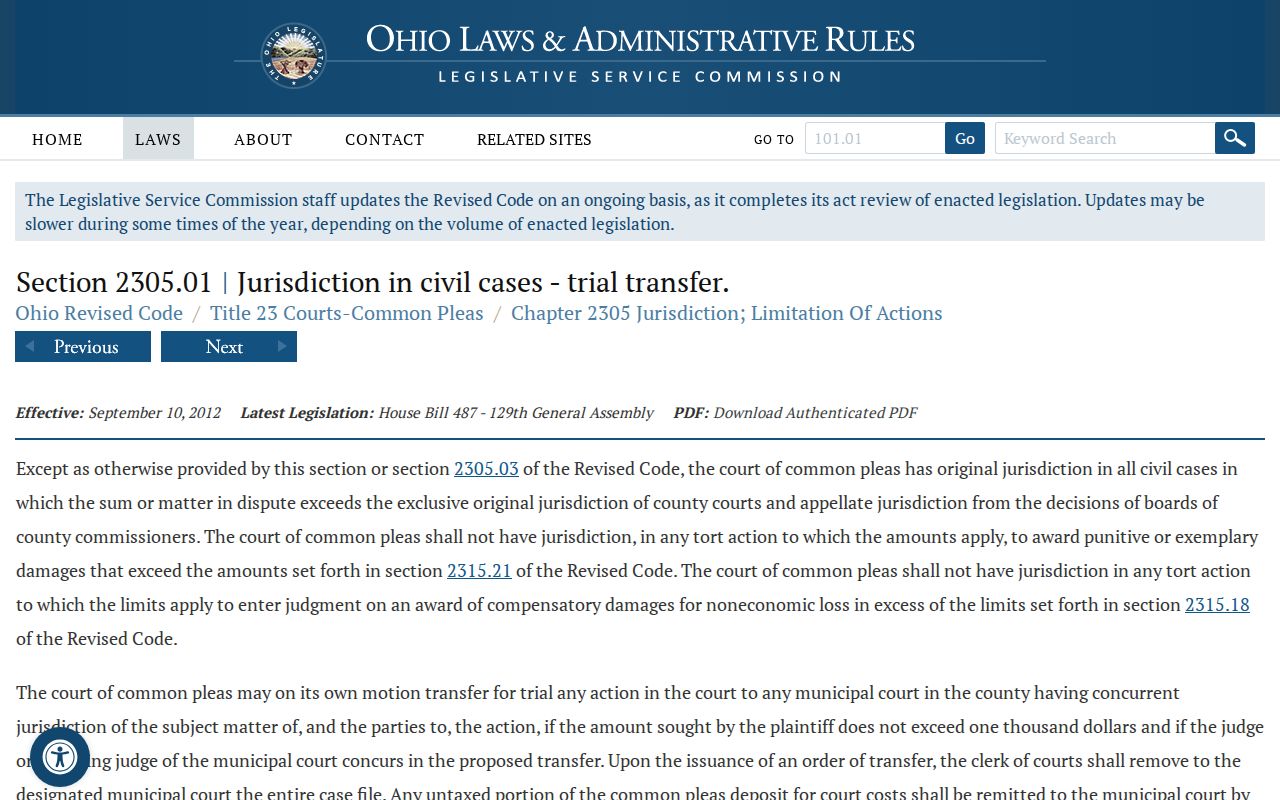 CourtView does not show online Common Pleas records before 1990, so a clerk request is the documented fallback for that period.
Who Can See Civil Dockets
Ohio treats court records as open by default. The public-access rules still allow sealed files, personal-identifier limits, and protected categories, so remote viewing is not a promise of every page. CourtView follows a prior-business-day update rule. It also offers no pre-1990 records on the web. Probate cautions that new filings and judicial actions can take 24 hours or more to appear. Under the local rules, you may inspect any Common Pleas case file at the courthouse during regular hours. You may not remove it. Photocopies are available after paying the copy fee. Ordinary copy prices and mail turnaround vary, so confirm with the clerk. For the full filing history behind a docket search, see Clark County Court Case Records, which walks through the clerk's record-request route.
Clark County Civil Fee Caution
Do not read a filing-cost schedule as a price list for copies. The Common Pleas costs source shows a $325 deposit for a new civil filing. A foreclosure filing takes a $620 deposit. Those figures cover filing, not the cost of a docket printout or a certified order. Ask the clerk to confirm the exact document, format, current charge, and delivery method. Do that before you submit any request.
The Municipal Court’s Costs page is the live source for court cost materials.  It is safer to request a plainly identified judgment, order, or certified copy than to assume a one-size fee from a filing schedule.